Why Local BBQ Joints Are the Heart of Chicago's Barbecue Scene
Walk into any neighborhood barbecue spot in Chicago, and you will notice something right away. The smoke hits you before the door swings open. The sound of a knife scraping against a cutting board, the low hum of conversation, the smell of wood and rendered fat hanging in the air. These are not just restaurants. They are community anchors, places where pitmasters have spent decades figuring out exactly how to make a rib tip snap clean or a sausage snap in your mouth. For anyone serious about barbecue, local BBQ joints are where the real education happens.
I grew up on the South Side, and my first taste of real barbecue did not come from a national chain. It came from a cinder block building with a hand-painted sign and a line that stretched past the bus stop. The man behind the counter knew my father's name. He knew how we liked our links, and he always threw in an extra slice of white bread without being asked. That kind of experience cannot be replicated by a corporate playbook. It lives in the details, in the way a pitmaster reads the weather and adjusts the fire, in the way a sauce recipe gets passed down through a family before it ever reaches a menu.
What Makes a Local BBQ Joint Special
National chains have their place. They offer consistency and convenience. But they rarely capture the personality of a city the way a neighborhood barbecue spot does. Chicago's barbecue heritage is built on distinct regional styles, from the South Side's rib tips and hot links to the West Side's whole-pit smoked shoulders. Every local BBQ joints BBQ Bucket List entry tells a story about the neighborhood it serves. The pitmaster might have learned from a relative who cooked in the back of a tavern. The sauce might be a closely guarded blend of paprika, cayenne, and something sweet that nobody will name out loud.
One of the things I value most about these places is the honesty of the product. When you walk into a local joint, you can see the smoker. You can smell the wood. You can watch the pitmaster pull a rack of ribs from the fire and know, in that moment, whether they care about what they are doing. That transparency builds trust. It also builds flavor, because the people running those pits are not following a corporate spec sheet. They are following their senses, adjusting the airflow, checking the bark, tasting the meat until it tells them it is ready.
Navigating the Local Barbecue Landscape
Finding the best local spots takes more than a quick search. It takes curiosity and a willingness to explore neighborhoods you might not otherwise visit. Chicago is a city of neighborhoods, and each one has its own barbecue personality. On the South Side, you will find places that specialize in rib tips, those fatty, flavorful pieces cut from the spare rib, cooked low and slow until the fat renders and the meat pulls away from the bone. On the West Side, whole-pit smoking is more common, producing shoulders with a deep smoke ring and a crust that crunches when you bite into it.
Over the years, I have developed a few habits that help me separate the great joints from the merely good ones. First, I look at the volume. A joint that goes through a lot of meat on a weekday is a joint that sells fresh product. Second, I pay attention to the sides. If the mac and cheese is made from scratch and the greens have a little bite to them, the kitchen cares about more than just the meat. Third, I watch how the pitmaster interacts with regulars. A place where the staff knows people by name is a place that has earned its reputation one meal at a time.
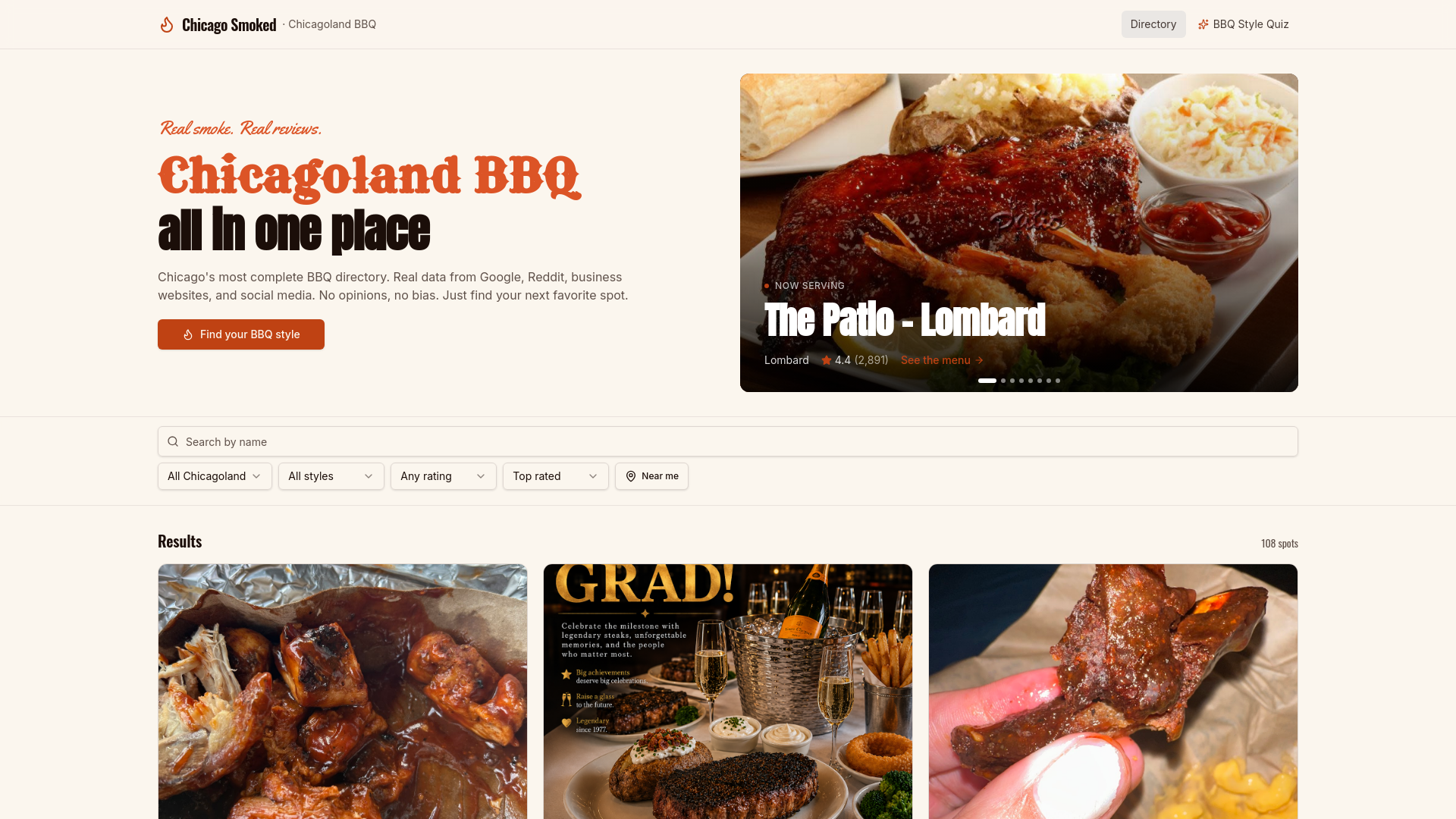
I also keep a running mental list of the spots I want to revisit. That list has grown longer every year, because Chicago's barbecue scene keeps evolving. New pits open. Old ones close. A pitmaster who used to work at a legendary South Side joint might open their own place in a new neighborhood, bringing a style that mixes tradition with personal innovation. Keeping track of all that movement can feel like a full-time job, and that is exactly why a resource like local BBQ joints BBQ Bucket List exists. It helps people document their finds and share recommendations without relying on generic review sites where every national chain gets the same star rating as a family-run smokehouse.
Practical Tips for Visiting Local Barbecue Joints
If you are new to the local barbecue scene, a few practical tips can make the experience better. First, go early. The best cuts sell out fast, especially at places that cook in small batches. If a joint opens at eleven in the morning, aim to be in line by ten forty-five. Second, bring cash. Many of the most authentic spots operate on a cash-only basis, or they offer a small discount for cash payments. Third, be prepared to wait. Good barbecue takes time, and the line at a popular spot is a sign that the food is worth the wait.
Another thing I have learned is to order beyond the obvious options. Everyone knows about ribs and brisket, but local joints often have specialties that do not appear on a typical chain menu. Beef links, smoked turkey legs, burnt ends, and even barbecue-spiced tamales show up in different neighborhoods. Asking the person in front of you in line what they recommend is one of the best ways to discover a hidden gem. Barbecue people love to talk about barbecue, and they will point you toward the thing that keeps them coming back.

I also recommend paying attention to the sauce game. Some places serve a single house sauce. Others offer a range, from thin vinegar-based mops to thick, sweet concoctions. A great sauce can elevate good meat to something memorable, but the best barbecue should taste good on its own. If a joint hides its meat under heavy sauce, that is often a sign that the smoke flavor is not doing the heavy lifting. Trust the meat first, and treat the sauce as a bonus.
The Community Side of Barbecue
Beyond the food, local barbecue joints serve a social function that is easy to overlook. They are gathering spots where people from different backgrounds share a table and a common appreciation for something cooked with care. I have had conversations with strangers at a counter over a tray of rib tips that lasted longer than some formal meetings I have attended. There is something about the act of eating with your hands, of getting sauce on your fingers and not caring, that breaks down barriers.
Many of these joints also support local events, sponsoring youth sports teams or donating food for community fundraisers. The pitmaster who feeds the block party on Saturday is the same person who shows up at the school auction with a gift certificate. That kind of investment creates a bond that a national chain cannot replicate. When you spend your money at a local joint, you are not just buying dinner. You are helping keep a small business alive, and that business, in turn, keeps the neighborhood connected.
I remember one winter evening when a blizzard shut down most of the city. The only restaurant on my block that stayed open was a tiny barbecue spot with a coal-fired pit in the back. The owner cooked all day, then handed out free sandwiches to the people who had shoveled the sidewalks. That moment stuck with me because it showed that barbecue, at its best, is not just about profit. It is about showing up for the people around you.
Keeping the Tradition Alive
Chicago's barbecue tradition runs deep, but it depends on people who care enough to seek out the real thing. Every time someone chooses a local joint over a fast-food drive-through, they send a signal that quality and character matter. The next generation of pitmasters is out there right now, learning from the veterans, tweaking recipes, and figuring out how to keep the smoke going in a city that changes fast.
For those who want to track their discoveries and share them with fellow enthusiasts, a resource like local BBQ joints BBQ Bucket List provides a way to organize that journey. It is not about ranking one spot above another. It is about building a personal map of the places that matter, the ones where the smoke is thick and the welcome is genuine. Chicago's barbecue scene deserves that kind of attention, because the people who run these joints put their whole lives into the work.
Next time you have a craving for something smoky and slow-cooked, skip the chain and find a local spot. Bring a friend, order more than you think you can eat, and take a moment to appreciate the craft. That is how the tradition survives, one meal at a time.